

Yale University Art Gallery Wayfinding & Signage System
Project Background
As the oldest university art museum in the United States, the building integrates 19th‑century Gothic stone structures with 20th‑century modernist expansions. The wayfinding system must adapt to the spatial character of “coexistence of old and new” and serve art lovers and academic visitors from around the world.
Design Core
Centered on “invisible artistic navigation”, create a wayfinding system that balances functionality and respect for the space.
Design Statement for the Wayfinding & Signage System
I. Design Concept
With “art‑first invisible navigation” at its core, the wayfinding system deliberately takes a supporting role in the space. Through a minimalist visual language deeply integrated with architectural textures, it fulfills navigation needs in the complex museum layout while keeping visitors’ focus on artworks and the architecture itself. It conveys the design philosophy: “architecture as exhibition walls, wayfinding as annotations.”


II. Core Design Features
1. Deep Integration with Architectural Materials
Historic Gothic Zone: Wayfinding information is directly engraved into stone walls (e.g., metal lettering for Coins and Medals inset into stone) or UV‑printed on wooden door surfaces, blending seamlessly with the century‑old architectural texture without damaging historic features.
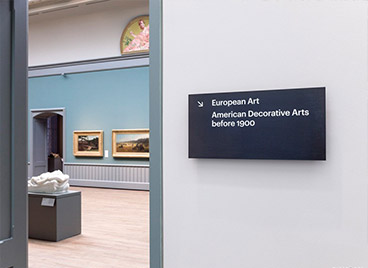
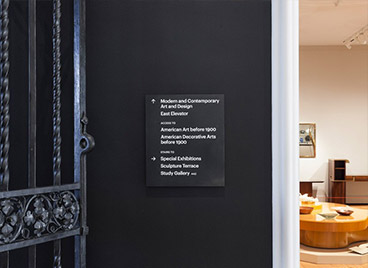
Modern Expansion Zone: Matte anodized aluminum panels are used for signage, installed flush with walls; gallery identifiers (e.g., Modern and Contemporary Art and Design) appear as projected lettering on concrete block walls, reinforcing the minimalist aesthetic of modern spaces.
2. Hierarchical Information Narrative
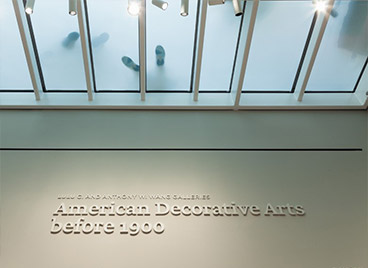
Level 1 Signage (Gallery Themes): Presented as 3D lettering or projected text (e.g., American Decorative Arts before 1900). Font styles match architectural zones—serif fonts for historic areas, sans‑serif for modern zones—acting as “invisible titles” of the space.
Level 2 Signage (Functional Directions): Matte metal panels inset into walls indicate gallery directions and functional areas (e.g., Study Gallery, Special Exhibitions), with clear hierarchy and minimal visual presence.
Level 3 Signage (Guide Maps): Modular black‑and‑white layout, clearly distinguishing functional layouts of old and new wings, adaptable to the museum’s dynamic exhibition schedule.
3. Minimalist Visual Language
Color palette: black + white + gray; information hierarchy is distinguished only by font weight and material texture to avoid distracting from artworks.
Font selection balances legibility and spatial compatibility: classic serif fonts (e.g., Times New Roman) for historic areas to echo Gothic elegance; sans‑serif fonts (e.g., Helvetica) for modern areas to strengthen minimalism.
4. Invisible Installation Strategy
Signage uses recessed + flush mounting; metal panel edges connect seamlessly with walls. Projected lettering appears directly on building surfaces without extra supports, minimizing architectural intervention and complying with historic preservation principles.


III. Materials & Craftsmanship
Historic Building Zone: Laser‑engraved metal lettering inset into stone; UV printing on glass/wood surfaces for high material and color compatibility.
Modern Building Zone: Matte anodized aluminum panels with laser engraving; 3D lettering with matte powder coating; projected lettering using high‑definition engineering projectors.
Craft details: Text and graphics use laser engraving or UV‑cured printing for long‑term clarity and wear resistance; installation structures are concealed to preserve the building’s original appearance.
IV. Functional Values
Spatial Symbiosis: Deep integration with materials and styles of old and new architecture strengthens the museum’s spatial narrative of “dialogue between history and modernity.”
Experience Optimization: Clear information hierarchy and invisible installation improve navigation efficiency without disrupting the immersive art‑viewing experience.
Brand Enhancement: Minimalist visual language aligns with the Yale University Art Gallery’s brand positioning of “scholarship + artistry”, boosting spatial identity and memorability.
Sustainability: Modular design supports rapid updates of exhibition information, adapting to the museum’s dynamic operations and reducing long‑term maintenance costs.


