

United Nations Office at Geneva (Palais des Nations)
I. Design Concept
With “A Visual Bridge for Diverse Coexistence” as the core, the signage system transcends the functional limits of traditional signs. Through modular design and integration of cultural symbols, it fulfills navigation needs in a complex space while conveying the United Nations’ values of diversity, inclusion, and dialogue, serving as a visual medium connecting visitors of diverse cultural and linguistic backgrounds.


II. Core Design Features
1. Modular Visual Language Adopting a modular structure of metal base + replaceable panels, all signage units are supported by a unified aluminum frame. Panels can be flexibly updated with text and graphics to meet the dynamic adjustment needs of UN agencies.
The modular design ensures visual consistency, reduces long-term maintenance costs, and complies with the minimum intervention principle for historic building preservation.
2. Multilingual and Inclusive Design
Signs use bilingual labeling in French and English (e.g., ÉTAGE / FLOOR, PORTE / DOOR). Key nodes add Arabic, Spanish, and other official UN languages to serve global visitors.
Signage is equipped with accessibility icons (e.g., wheelchair symbols), with installation height and font size ergonomically optimized to ensure clear information access for visually impaired and mobility-impaired users.
3. Contextual Color and Materiality
The color system features deep green, burgundy, deep purple, and warm orange as primary tones, echoing the stone texture and elegant interior finishes of the Palais des Nations. Orange acts as a visual accent to create clear focal points in complex spaces.
Main materials: anodized aluminum panels + matte powder coating, offering weather resistance and refined texture that harmonizes with the building’s stone walls and metal joinery without compromising historic integrity.
4. Information Hierarchy and Spatial Narrative
The system follows a three-level hierarchy:
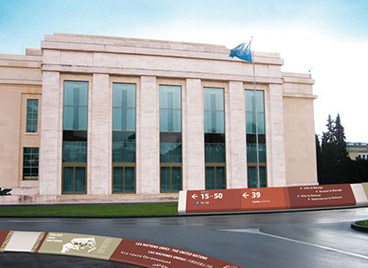
Level 1 (Outdoor Landmarks): Large modular signs at building entrances and main routes, using arrows and color blocks to distinguish functional zones (e.g., meeting room clusters 15–50, 39).
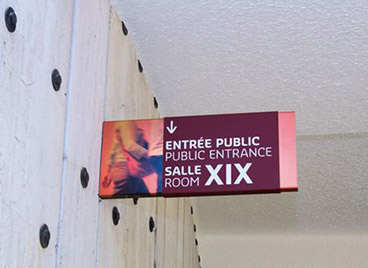
Level 2 (Floor Guidance): Ceiling-mounted or wall-mounted signs along corridors and staircases, clearly labeling floors and functional areas (e.g., SALLE XIX, SALLE DU CONSEIL).
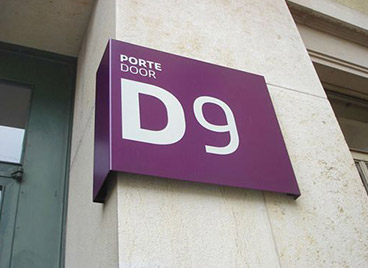
Level 3 (Room Identification): Small modular door signs above doorframes, using a letter + number coding system (e.g., D9) to simplify navigation in the complex room layout.
III. Materials and Craftsmanship
Primary Materials: Weather-resistant anodized aluminum for exterior use; matte powder-coated steel panels for interior, with anti-glare treatment for readability in strong light.
Craft Details: Text and graphics use laser engraving + UV printing for strong color adhesion. Modular frames are connected with precision hardware for structural stability and easy disassembly and adjustment.


IV. Functional Values
Experience Optimization: Clear information hierarchy and multilingual design enable global visitors to navigate the historic complex efficiently, improving accessibility and service efficiency.
Cultural Communication: Colors and materials reflect the building’s historic character; modularity embodies the UN’s spirit of flexibility and inclusion, making signage an integral part of spatial narrative.
Sustainability: Modular construction supports rapid panel replacement and recycling, aligning with UN environmental principles while reducing long-term operational costs.


